
Centennial Resident Lookup Sources
A resident lookup should begin with the record category that matches the question. A voter list can show registration fields in a dated file. A parcel record can show an owner of record and mailing address. A docket can show a party or attorney role. A license record can show a regulated credential. Municipal tickets follow the Centennial Municipal Court route. A vital-record office can confirm a certificate only for an eligible applicant. No one source is a universal current-residence file.
The coverage table uses the official custodian and the correct access route. If the online result is too thin, the next step is a request form, clerk, county office, library, or archive rather than a broader name scrape.
| Record | What It Confirms | Where to Search | Access |
|---|---|---|---|
| Parcel record | Owner, situs, mailing address, legal description | Arapahoe Parcel Search | Free portal |
| Voter registration | Dated address, status, district, history fields | Arapahoe voter lists | List rules and exclusions |
| Court record | Case, party role, event, and document category | Colorado Judicial | Search or request |
| Vital record | Birth, death, marriage, or related certificate | CDPHE Vital Records | Eligibility required |
| License or business file | Credential, entity, agent, or filing role | DORA or SOS | Public lookup |
Use the result’s source date, exact role, county, and identifier in any note. A record can be real and still belong to a different person with the same name.
Centennial Docket Search Fields
The Colorado Judicial docket search is a useful resident lookup only when the search is narrowed. Its controls include judicial district, county, courthouse, court type, division, date range or specified date, case-number year, case class, and sequence. Party fields distinguish individual from business and accept first name, last name, or business name. Attorney search can use name or bar number.
At least one filter beyond the date is required. That rule reflects the same-name problem: a broad name can point to several cases and roles. The Arapahoe County Judicial page places county and district matters in the 18th Judicial District, with the Justice Center at 7325 S Potomac St in Centennial and records contact at 18records@judicial.state.co.us.
| Location | Judicial district, county, courthouse, court type, and division. |
|---|---|
| Date | Date range or a specified date. |
| Case number | Four-digit year, case class, and case sequence. |
| Party | Individual or business, first name, last name, or business name. |
| Attorney | Attorney name or Colorado bar number. |
The docket result interface is JavaScript-driven, so result sort, pagination, and download behavior should be checked at the live portal. For a document, use the official record/document request form, not an assumption that a docket page contains the complete file.
The docket capture shows the filters that drive a search and the need to keep a court result tied to its source.
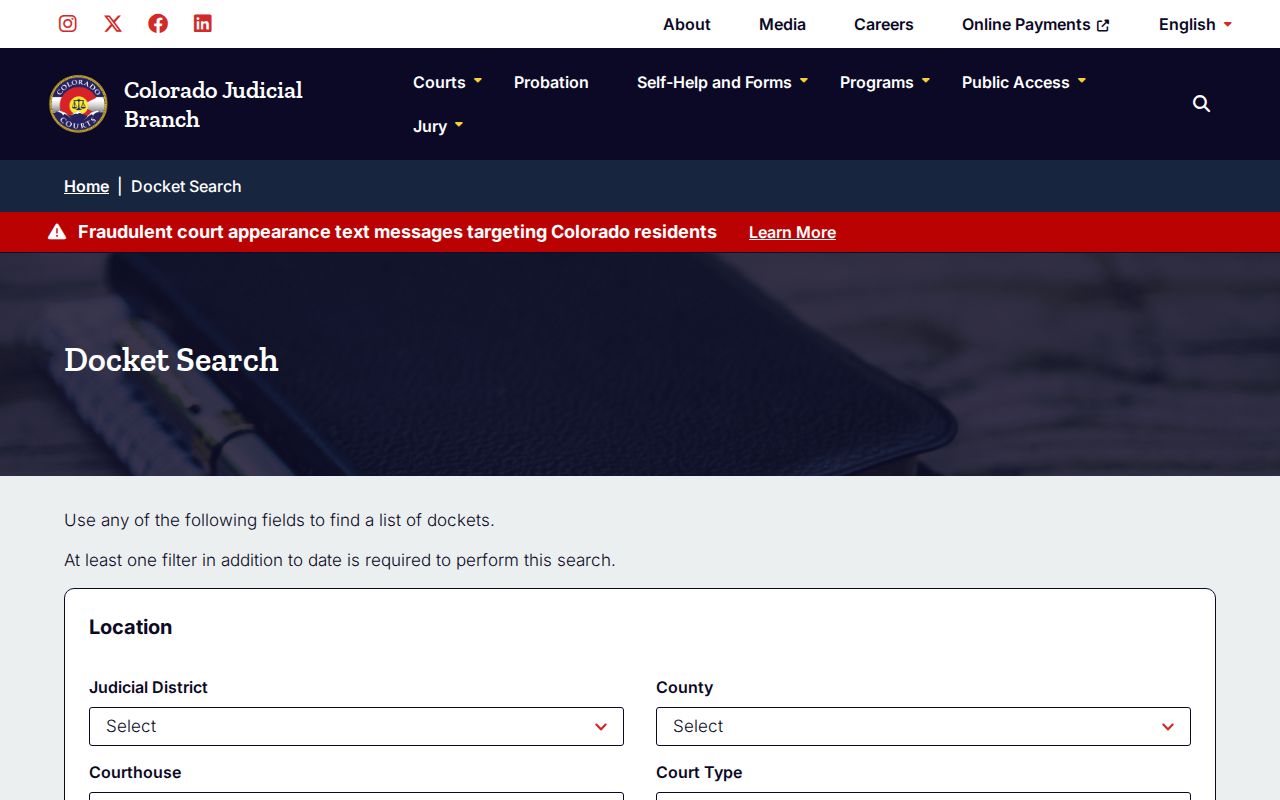
The docket image is a field guide. It does not establish a match until court, case class, party role, date, and disposition are checked.
Centennial Name Anchors
The safest name search starts with an anchor that another record can repeat. Use a full name with a middle initial, a dated address, a parcel ID, a case number, a license number, a business entity ID, or a historical page. Do not join a voter, parcel, court, license, and directory result on name alone.
Check geography before identity. A Centennial mailing line can share a ZIP with a neighboring municipality. A present-day street may appear under Littleton, Englewood, Greenwood Village, Cherry Hills Village, or unincorporated Arapahoe County in an older record. Check the role next: owner, voter, grantor, attorney, licensee, party, obituary subject, or directory householder is not one category.
Check time as well. A deed recording date, election-file date, license status date, directory year, court event, and obituary publication date cannot be swapped. The Centennial street directory can handle the parcel and address chain when a person search turns into a place question.
Note: “Listed in,” “registered at,” “named in,” and “owner of record” are safer descriptions than “lives at.”
Centennial Registration Dates
Arapahoe voter lists are valuable because their fields are defined and their update cadence is documented. The Basic Voter List is updated each weekday except holidays. Other products add districts, voter history, ballot files, voter details, or rejected cures. Custom criteria can use a precinct or district, party, active or inactive status, and a five-year, twenty-year, or named-election history.
Public list fields may include name, address, registration status, voting history, precinct, district, and ballot preference. Confidential voters, preregistered voters under 18, and protected fields are excluded. The county does not publish Social Security numbers, driver-license or state-ID numbers, signatures, email, month and day of birth, or how someone voted. A missing name is not conclusive without checking list scope and confidentiality.
The county lookup is the practical route for a local registration question, while a statewide voter service handles registration and ballot services. The Colorado voter-registration form explains public and confidential fields. Dynamic county result fields should be recorded with a capture date rather than summarized from memory.
The county voter-list page shows the dated files and exclusion rules that should travel with a resident lookup.
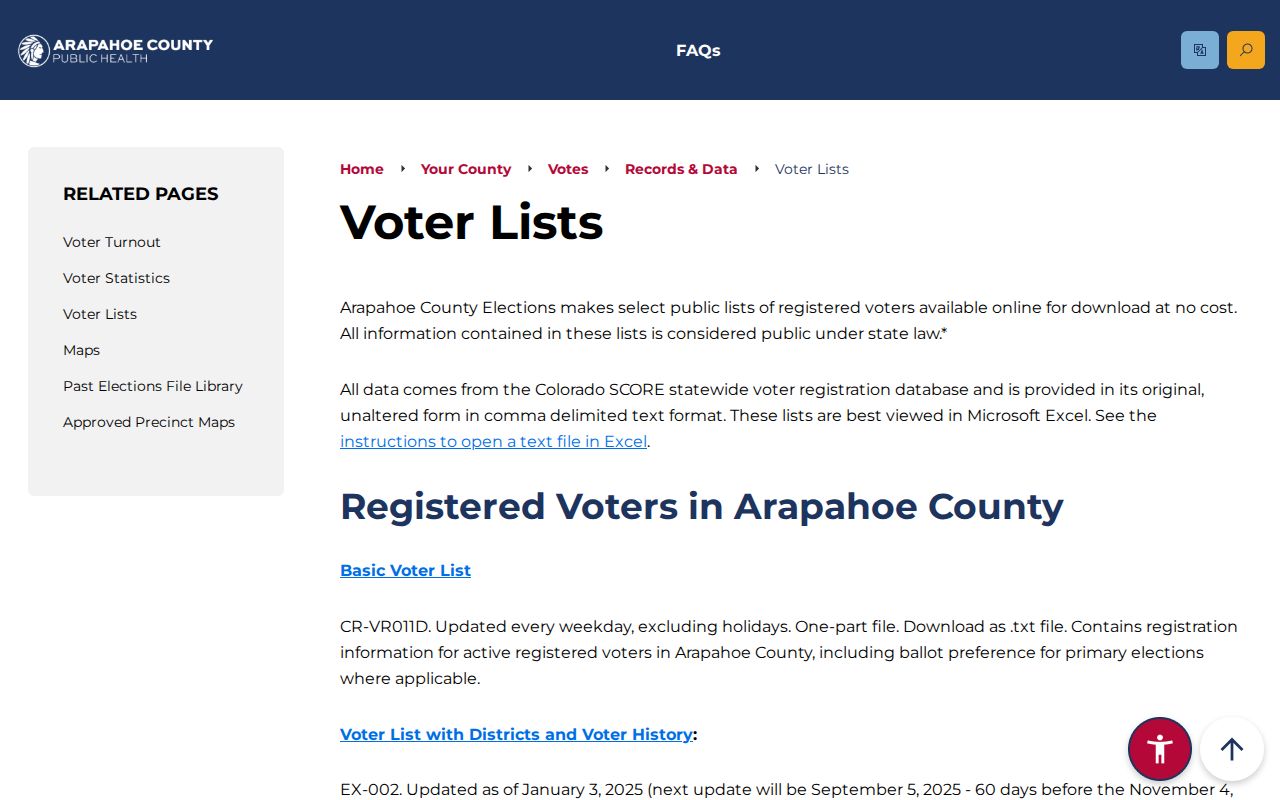
The voter image is a list-source reference, not a claim about a particular person or address.
Verify One Centennial Resident
A one-person resident lookup is strongest when it moves from one anchor to a second independent role. For example, a dated name can be compared with a parcel owner, then the parcel’s legal description can be checked against a deed. The second source does not prove residence; it tests whether the same person, place, and time remain plausible.
Use the following sequence for a name-to-address research task. Stop when the question has been answered. Do not gather unrelated sensitive details merely because a portal displays them.
- Write the full name, known middle initial, date range, and the reason for the search.
- Run the relevant dated voter list or official lookup, saving the list type, status, county, and file date.
- Use the parcel search to test the address, PIN or AIN, situs, owner, and mailing-address relationship.
- Check the recorder index for a deed or other document whose party and legal description match the parcel.
- Use court, license, obituary, or library records only when that category fits the question, and label its role separately.
A result should preserve the fields that a reader needs to verify it without publishing unnecessary personal data.
| Source date | When the file, page, docket, or directory was accessed or published. |
|---|---|
| Identifier | AIN, PIN, case number, license number, entity ID, or page number. |
| Role | Owner, voter, party, attorney, licensee, agent, or historical householder. |
| Scope | County, court, profession, directory geography, or record type. |
| Limitation | The specific reason the result does not prove current residence. |
- Docket
- An event-oriented court record or index showing a case and its filings or events.
- Index versus image
- An index helps find a record; an image or certified copy may contain more detail and different access rules.
- Certified copy
- A copy issued or certified by the custodian, often with an added fee or eligibility requirement.
The historical side of a name search belongs with the Centennial city directory collections, where a directory year and publisher can be tested before a modern record is used.
The request form shows how a court record becomes a document request instead of an inference from a search result.
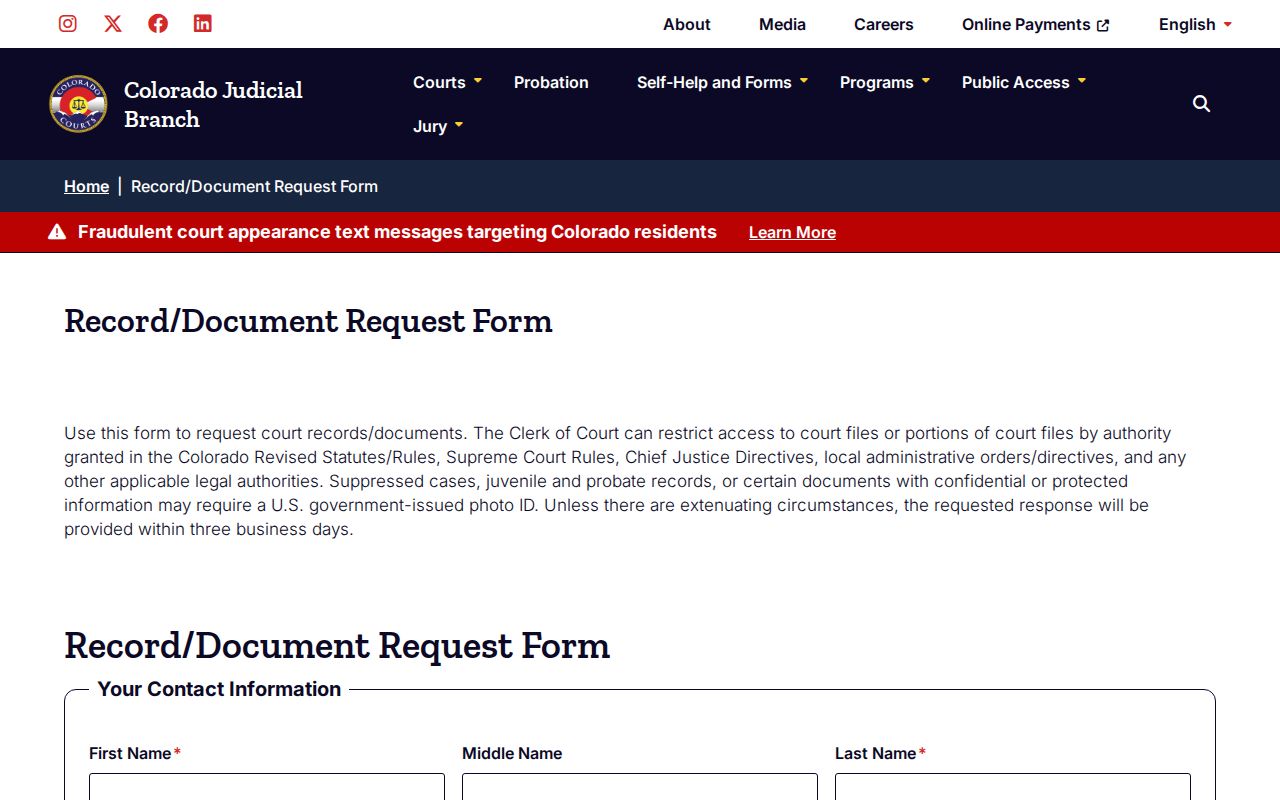
The official request image reinforces the need for a case, county, document category, and requester details.
Centennial Vital Record Access
Colorado vital records cannot serve as a general public resident lookup. CDPHE says there is no public online searchable individual index and describes birth, death, marriage, civil-union, adoption, and divorce access as confidential or record-specific. The CDPHE research request page ties the confidentiality rule to CRS §25-2-117. The Colorado Voluntary Adoption Registry has its own consent and application rules. A certified-copy applicant may need valid identification, direct and tangible interest, relationship proof, or a court or legal document.
Access routes vary. CDPHE links approved online vendors, mail, and in-person appointments. County offices may issue birth or death certificates. County Clerks and Recorders issue marriage or civil-union records, district court clerks handle divorce matters, and historical archives hold selected runs. The other vital requests page explains eligibility, delayed birth registration, and common-law marriage information.
The CDPHE page states a normal online processing estimate of 30 business days from receipt and notes a vendor surcharge. Treat that as a current agency statement to recheck before ordering. A library obituary or archive index may answer a historical question without making a current certificate accessible.
CDPHE’s access page makes the confidentiality rule clear before an applicant starts a name search.
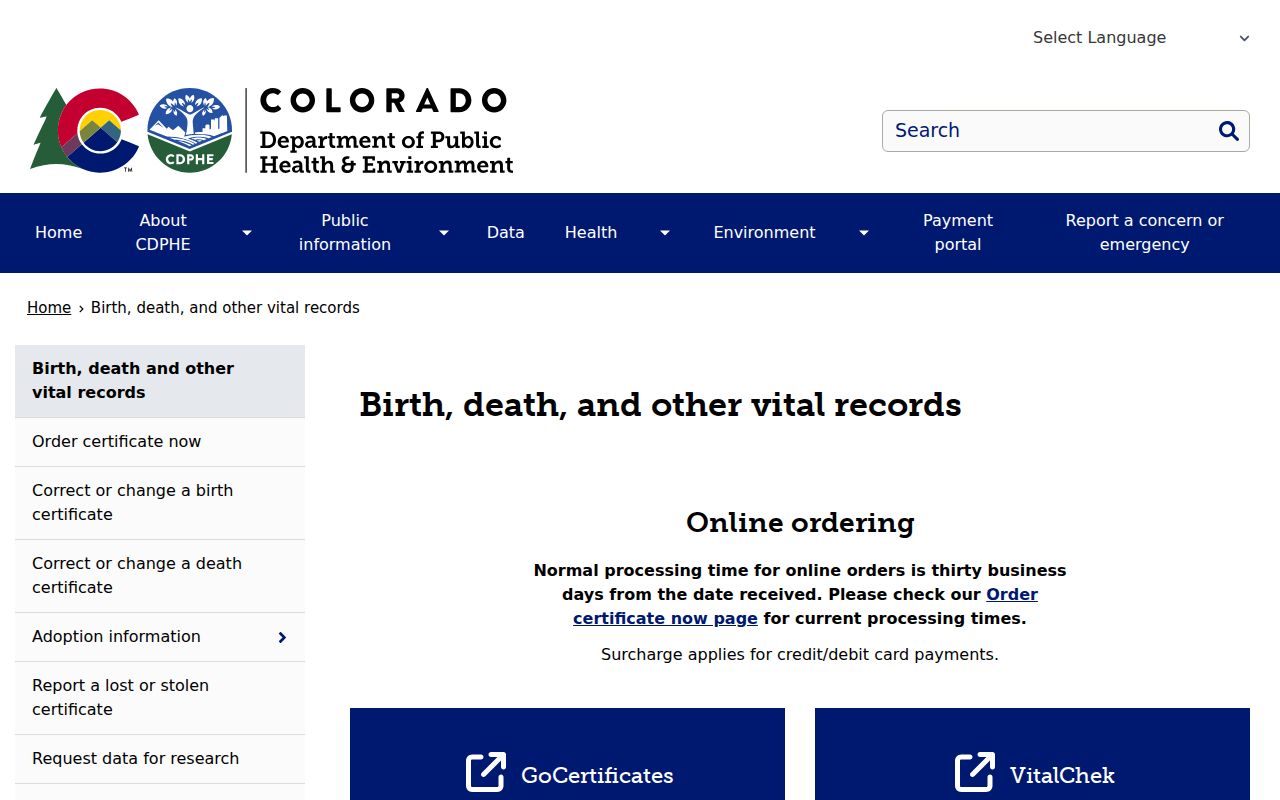
The image belongs with the eligibility and ordering explanation, not with a claim that a public birth or death index exists.
The state’s other-vital-requests guidance adds the proof and delayed-registration path for applicants who need a record-specific route.
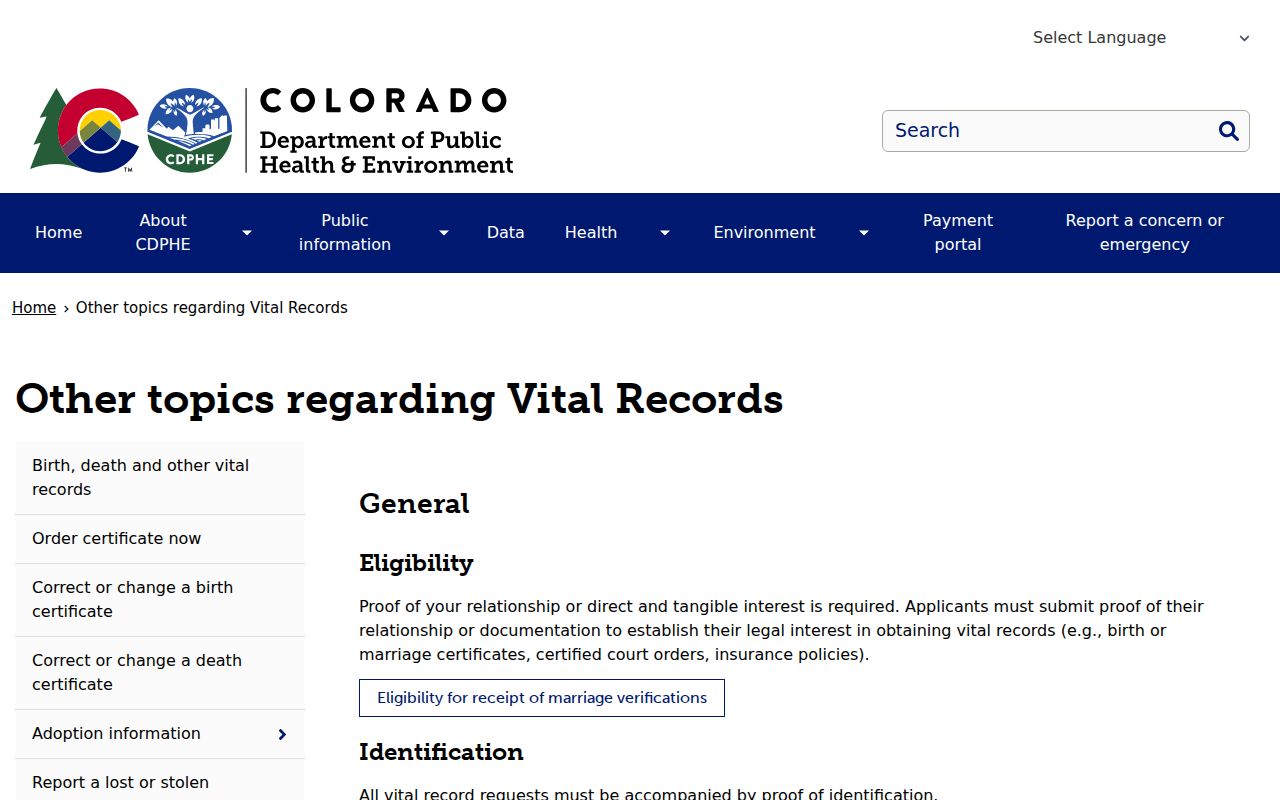
Keep the application, identification, eligibility proof, and request type tied to the official instructions.
Centennial License and Entity Roles
A state license verification search can confirm a regulated profession, license type, name, number, status, and sometimes disciplinary documents. It supports profession, first or middle name, license type, last name, license number, and status. A wildcard can follow partial information. A license is a professional role, not a home address.
The Colorado Secretary of State business search can use business name, trademark, trade name, ID, or document number. An entity detail may show status, formation date, entity ID, form, jurisdiction, principal office, mailing address, registered agent, and filing history. A registered-agent or principal-office address is a business relationship.
Use Great Colorado Payback for a claim lead based on a name, business, former ZIP, or former name. The state holds property perpetually, but a match still requires claim and identity documentation. Keep an entity, license, unclaimed-property, and parcel result in separate records.
Centennial Jail and Registry Scope
Detention, DOC, and registry records are separate systems with different scope. The Arapahoe detention information page and Charges and Bonds application point to current jail channels. The facility is at 7375 S Potomac St in Centennial. The Colorado DOC search uses DOC number, last name, first name, gender, and a verification control. CBI’s public registry covers qualifying adult categories and warns that it is not a complete list.
CBI says registry data does not guarantee identity or current residence and should not be used for retaliation or harassment. The agency also provides an adult-list request route and a separate juvenile named-person process with written need. A DOC result concerns custody or supervision scope, not an Arapahoe County jail booking. Never combine these categories into one criminal-history profile.
When a public record mentions a person, preserve the case or record type, source date, agency, and disclaimer. A filing, booking, registry entry, or docket party is not automatically a conviction, a current address, or a complete identity.
Centennial Request Routes
When a resident lookup needs a record that is not exposed online, ask the custodian for a defined category. The City of Centennial public-records page offers Building and Planning and Meeting Records, then a request-form fallback. The OpenForms process asks for requestor name, daytime phone, email, a specific document description, and whether copies are requested. It has conditional sections for court, criminal-justice, discovery, and zoning matters.
Colorado Judicial’s request form asks for requester contact details, county or location, case type, year, case number, DOB if known, party information, document categories, and certified or exemplified-copy choices. A government photo ID may be required for suppressed, juvenile, probate, or protected information. The Colorado Judicial access guide explains the public-access, CJRA, juvenile, and protected-record limits. The form says a response is normally within three business days absent an extenuating circumstance.
For CORA, narrow the request by office, date range, address, parcel, case number, or document type. Request electronic copies where possible. The Colorado Attorney General CORA summary explains the statutory timing and access framework. The county’s public records contacts page can route a request to the right office rather than the county court desk.
Note: A custodian can provide a record or explain an exemption; it does not have to assemble a new all-purpose resident directory.
Centennial Resident Lookup Limits
Colorado’s Address Confidentiality Program gives eligible participants a substitute address and mail forwarding, generally for a four-year certification. Confidential voters, juvenile and sealed court records, protected vital records, and restricted criminal-justice material may not appear in a public result. The Colorado Privacy Act provides rights in qualifying contexts, while lawfully public government records follow custodian and public-access rules.
Public access is not permission to republish a full personal record. Omit unnecessary DOBs, signatures, private email, account numbers, exact protected addresses, and sensitive attachments. State the source, date, role, and limitation. If a person disputes a record, direct the correction question to the custodian.
Lawful personal use. A Centennial resident lookup is for family history, reconnecting, civic research, or another lawful personal purpose. Do not use a name, address, court result, or protected record to stalk, harass, intimidate, or harm anyone.
A reliable result is often shorter than an unreliable one. It says what the record confirms, what it does not confirm, and where the official answer can be checked.