
Centennial Address History Sources
One address can have several histories. The Recorder follows title documents and other instruments. The Assessor supplies current parcel and sale context. Directories show a person or business in a published year. Newspapers and obituaries add events. City permits and planning records show work or land use. State Archives runs can anchor an older marriage or death. The source table keeps those trails distinct.
Coverage is uneven. The deed name index has a known modern cutoff, the DPL directory runs are regional rather than a confirmed Centennial shelf, and historical archive holdings use their own county and year labels. Start with the era you need, then choose the record that actually covers it.
| Source | Years It Covers | Where Held | What It Shows |
|---|---|---|---|
| Arapahoe grantor/grantee index | 1980-present by name index | Recorded Documents portal | Parties, documents, dates, references |
| Older deed references | Pre-1979 strategy | Recorder office, Book/Page, reception number | Earlier chain when a name search stops |
| DPL directories | 1873-1937 examples and gaps | Denver Public Library | Names, addresses, businesses, householder entries |
| State Archives marriage runs | 1859-1902 examples | Colorado State Archives | Index, applications, certificates |
| City permits and planning | Current city records | City of Centennial | Parcel work, planning, code, and development history |
Use the record date and historical jurisdiction as part of the answer. A modern street line alone is not enough to search a pre-2001 volume.
Centennial Deeds After 1980
The Arapahoe recorded-document portal is the current owner and transfer trail for previous residents research. Quick Search supports grantor or grantee, subdivision, document type, document number, recorded-date presets, and index-only or index-plus-OCR scope. Advanced Search adds party names, reception number, Book and Page, document types, parcel ID, property address, legal descriptions, and other legal fields.
The portal displays a date range reaching back to June 3, 1872, but county digital-records guidance says the grantor/grantee name index is 1980-present. Records before 1979 generally require a reception number or Book/Page. This is the key search break: older history may exist, but a modern name query may not find it.
Result cards can display reception number, Book, Page, number of pages, recorded date, consideration, document status, grantor, grantee, references, document type, and legal description. A registered account can provide a watermarked digital copy. The Digital Records guidance identifies $0.25 per page for an unwatermarked copy and $1 per document plus $0.25 per page for a certified copy; current fees should be checked before ordering.
The quick-search page illustrates the difference between a name index and a complete document image.
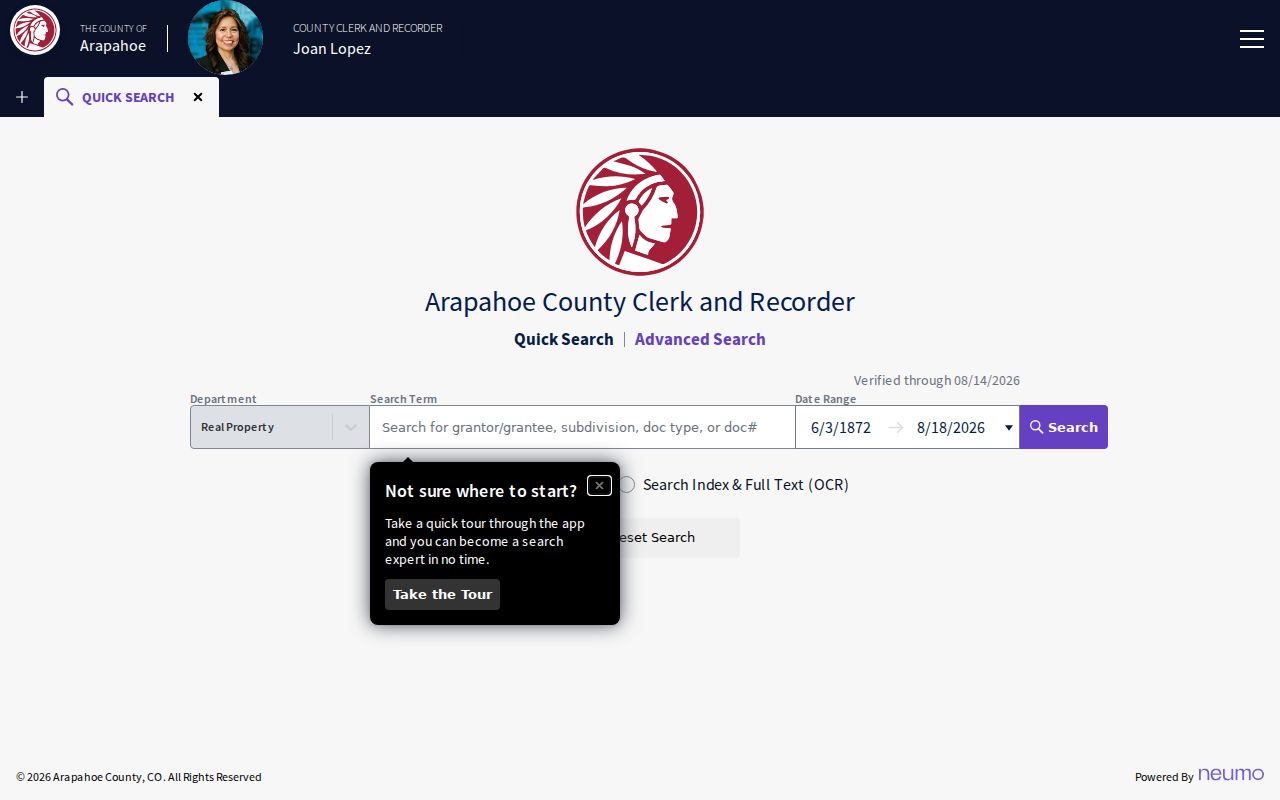
Use the portal image as a field guide, then save the reception number or legal description that can carry the search into an older source.
Trace the Centennial Deed Chain
A chain of title begins with the current parcel record and moves backward through recorded instruments. The assessor supplies the current owner-of-record context, AIN or PIN, situs, legal description, and sale history. The Recorder then provides a deed or other instrument that can connect the current party to a prior party. A transfer can involve a person, trust, estate, lender, corporation, or representative, so the party role must stay visible.
Use the legal description as the stable anchor when a street line has changed. The steps below describe a research path, not a guarantee that every historical document is digitized.
- Pull the parcel’s current owner, AIN or PIN, situs, and legal description from Arapahoe Parcel Search.
- Use the current owner or parcel reference in the Recorder index and identify the purchase deed by date, document type, and legal description.
- Read the seller or grantor as the next lead, then search that party as a grantee in an earlier instrument.
- Repeat backward while noting reception number, Book, Page, date, consideration, references, and any name variation.
- When the name index stops, ask the Recorder about the reception number or Book/Page and use office-assisted or older-book research.
- Grantor
- The party transferring or conveying an interest in the recorded instrument.
- Grantee
- The party receiving the interest named in the instrument.
- Chain of title
- A sequence of recorded transfers used to trace an interest backward through time.
- Legal description
- The recorded parcel description, often more stable than a changing street line.
A deed party is not automatically a person who lived at the property. Keep the title trail and household trail as parallel records.
Book and Page Older Centennial Deeds
Book and Page becomes important when a name search cannot reach the older record. The Arapahoe Recording Division handles document recording and provides appointment, eRecording, 24-hour red drop-box, and mail channels. Its staff can answer book/page and older marriage-license copy questions at recording@arapahoegov.com. A CORA request through the county administrative request system is not a substitute for the deed or title search.
Use a public, non-sensitive parcel when testing the method. The assessor’s sales table can expose an older Book/Page reference, which can then be carried to the Recorder. Ask for the record type, parcel, reception number, or Book/Page and explain the historical date range. Do not publish a raw image that exposes signatures or unnecessary account information.
The county’s recording page shows the alternative channels when the web index is not enough.
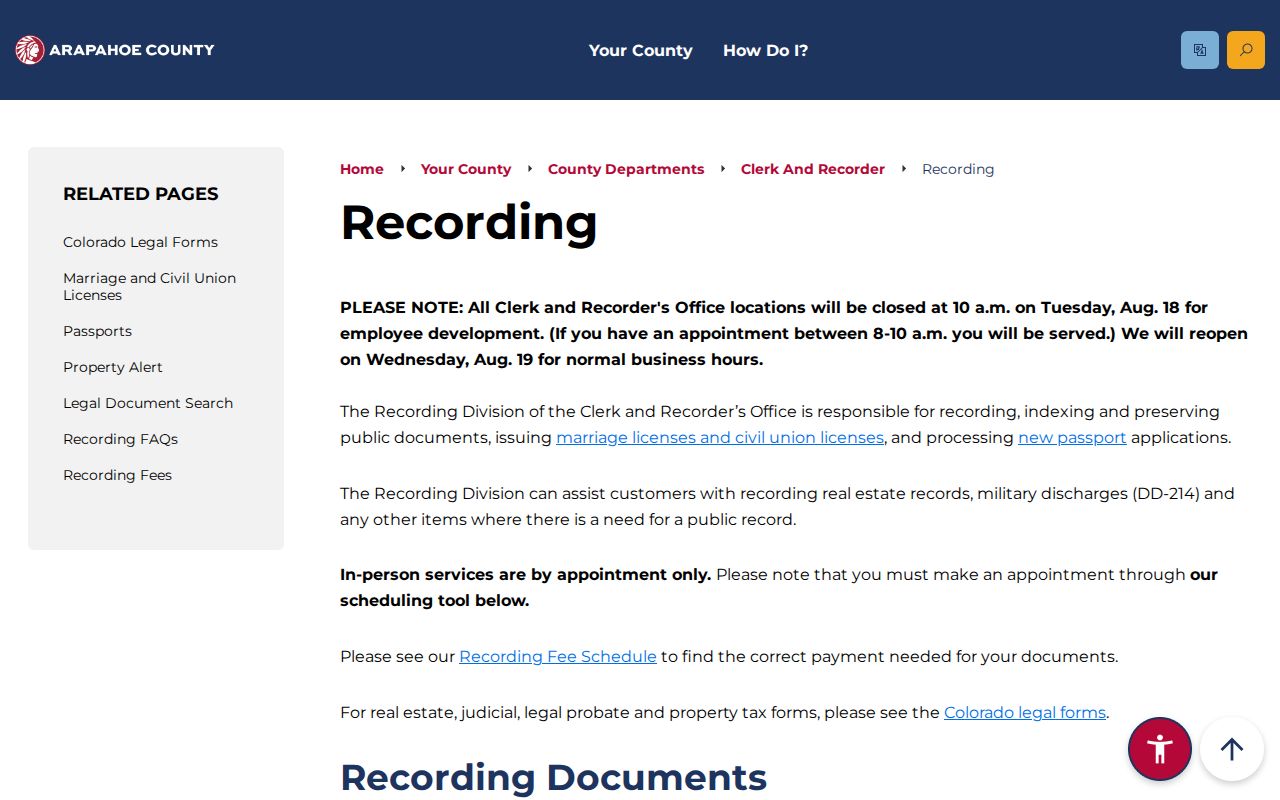
The office image belongs beside the fallback path: appointment, mail, eRecording, drop box, or a targeted contact can supplement the online index.
Note: A reception number or Book/Page is a finding key, not a statement about who lived at the address.
Bridge Centennial Historical Place Names
Every previous-residents search in Centennial has a jurisdiction problem because the municipality is young and the landscape is older. The city history says organization followed the 2000 incorporation vote and first council activity in 2001. A prior deed, newspaper, or directory may use Arapahoe County, Littleton, Englewood, Greenwood Village, Cherry Hills Village, or an unincorporated label.
Use ArapaMAP to test the current parcel and boundary, then search the older source under the historical label. A ZIP last line is a weak bridge because the city’s 2025 packet documents six shared ZIPs and possible last-line changes. Preserve the exact old name, year, street, page, and modern parcel connection.
There is no official all-years street-renaming, annexation, parcel-split, or address-crosswalk index in the research inventory. For a difficult address, request historical planning or permit records and compare legal descriptions rather than guessing from the street name.
Householder Directories Backward
Householder and criss-cross directories supply the household layer that deeds do not. Denver Public Library describes city directories from 1873-1923 and householder directories from 1924-1937. The name volume may show an occupation and residence abbreviation; the street volume can carry the address, intersection, business, or occupant context. Search the older jurisdiction because the city name Centennial did not exist in those volumes.
The 1887 street directory is a useful example of address arrangement. For publisher and year context, use the Centennial city directory collections page. A directory entry should be cited by volume, year, page, arrangement, and source URL.
Pair a directory year with the nearest census or newspaper year, then check an obituary or marriage run when a household relationship matters. A missing entry can indicate a move, death, name variation, coverage gap, or different section.
Past Centennial Households
Previous residents are a household-history question, not only an ownership question. Work from the address section of a directory, then pair each available year with a census, newspaper, obituary, marriage record, or city planning file. This can reveal an earlier household or business relationship while keeping the historical date clear.
Use the following flow as a record note: current parcel → legal description → deed references → historical jurisdiction → householder page → dated obituary or marriage run. Each arrow needs its own source. The Arapahoe Libraries genealogy resources can provide newspaper and obituary databases under card or in-library rules.
- Choose one target year and write the address as printed in the source.
- Search the name and street sections, preserving abbreviations and page numbers.
- Compare the next available directory year and the nearest census or newspaper result.
- Use an obituary, marriage, cemetery, or archive source to test a relationship or endpoint.
House-history care. A past household should be labeled by year, source, and role. Do not convert a historical entry into a current person or address claim.
Centennial Marriage and Death Trails
Colorado State Archives provides named historical runs that can close an address trail. The Arapahoe County Index of Marriages covers 1859-1901, license application stub books cover 1874-1902, and Clerk and Recorder certificates cover 1860-1899. The Archives death inventory includes statewide death certificates from 1877-1899, a death index from 1941-1948, and Denver or Arapahoe holdings such as cemetery plot certificates and coroner material.
The marriage-record request guide says to identify record type, county, year, and spelling. The State Archives death holdings are historical, not a current Centennial vital lookup. For a modern certificate, use CDPHE or the county office under its direct-and-tangible-interest rules.
The marriage-record guide capture shows the fields that make an archive request findable.
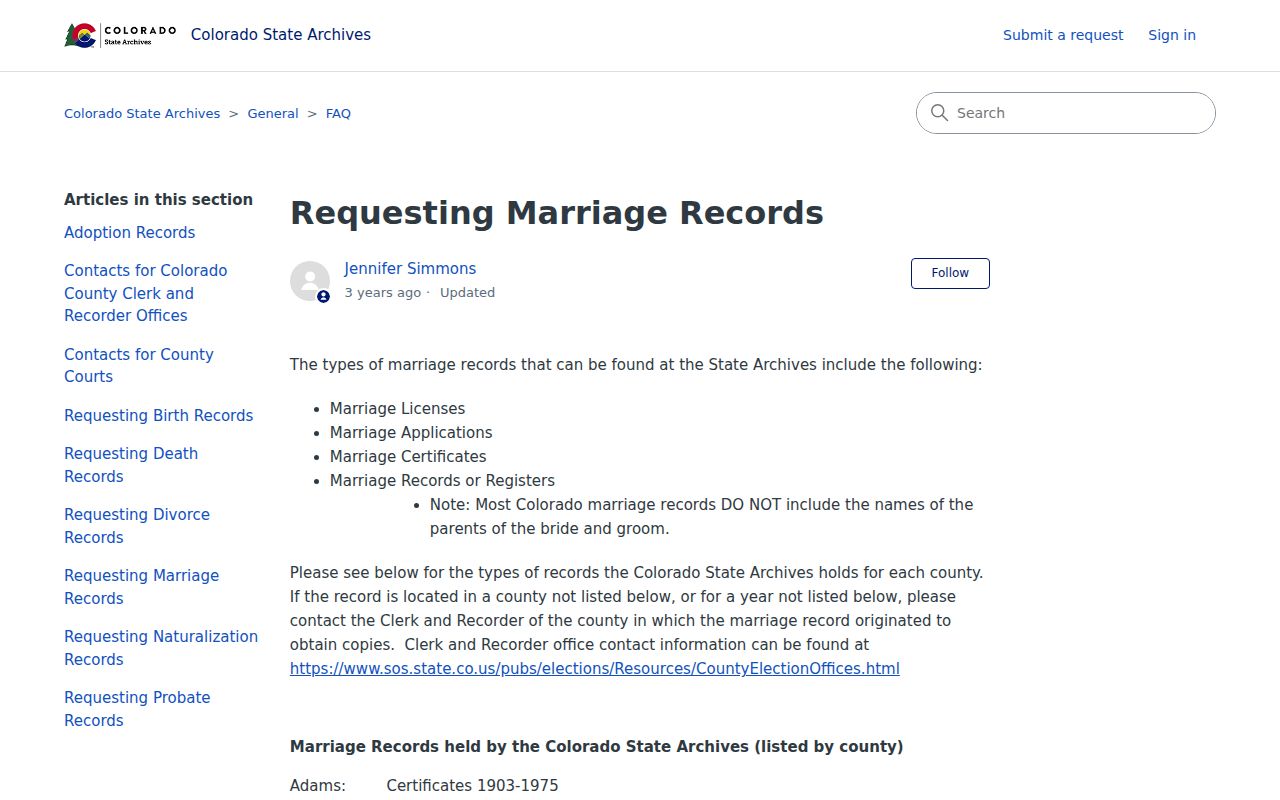
The marriage image belongs beside the county, year, record type, and spelling requirements, not beside a current resident claim.
Municipal court advisement can also matter when an old address history includes a city case. Centennial’s page explains sealing eligibility for some municipal convictions and non-convictions, with statutory references. That is a reason to avoid republishing old ticket names and to check whether a record is still accessible.
The municipal advisement page shows why a record’s availability can change after its first appearance.
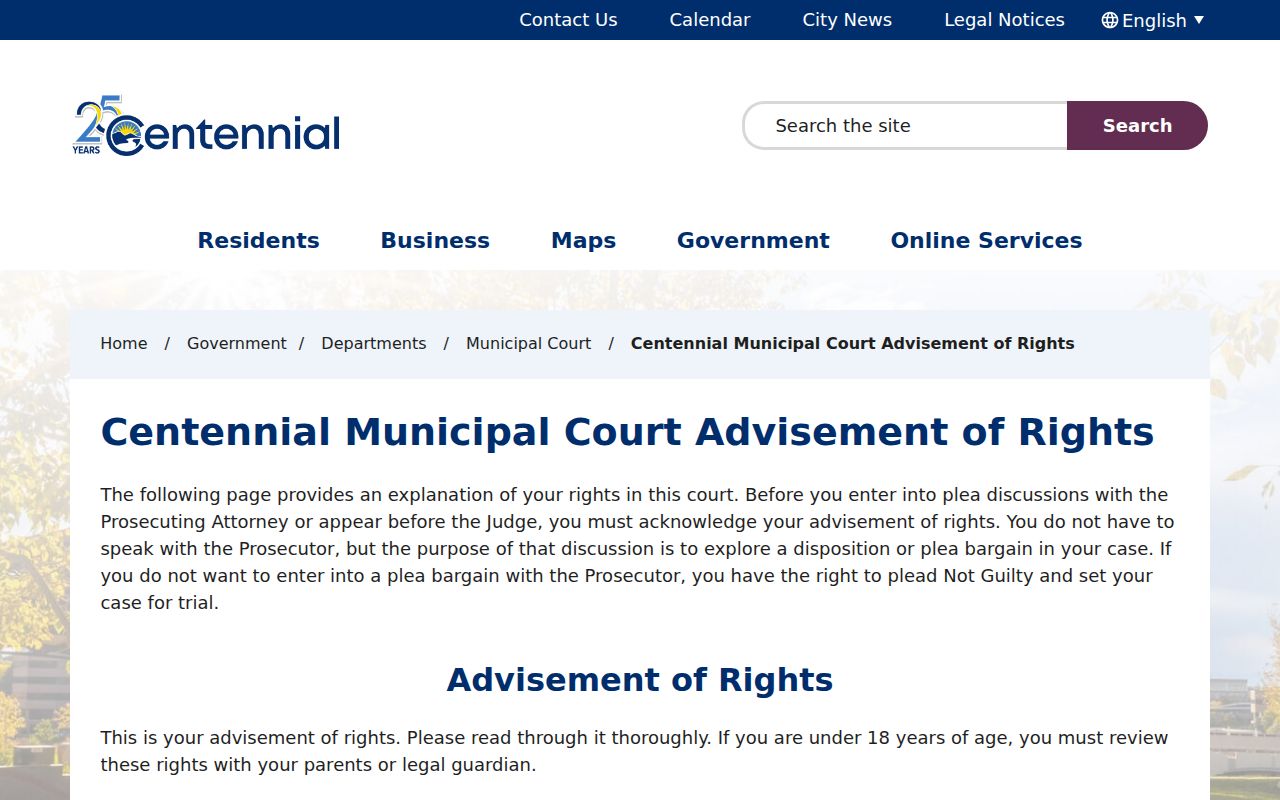
The image should be read with the city’s sealing and access language, not as a source for a household list.
Centennial Permit and Planning History
City permits, inspections, planning cases, zoning material, and development records can show how an address changed without claiming who lived there. The public-records page offers online Building and Planning Records and Meeting Records, with an OpenForms fallback. The city’s Building page says the division enforces 2021 International Building Codes and 2018 energy codes; exact live search fields were not exposed in the research capture.
A request should identify the parcel, address, date range, record type, and desired format. The form can ask for copies, and the city may follow up about scope, fees, or time. Use a plan or roadmap as a future planning record, not as proof that a proposed land-use change already happened.
Centennial’s Midtown roadmap, Dry Creek light rail context, and older business-park planning can explain why a parcel’s present use and a future vision appear in different records. Preserve the publication date and status.
The city’s request form is a fallback when an address file is not exposed through a public search. The county public-records contacts page can route a county-held question to the right office.
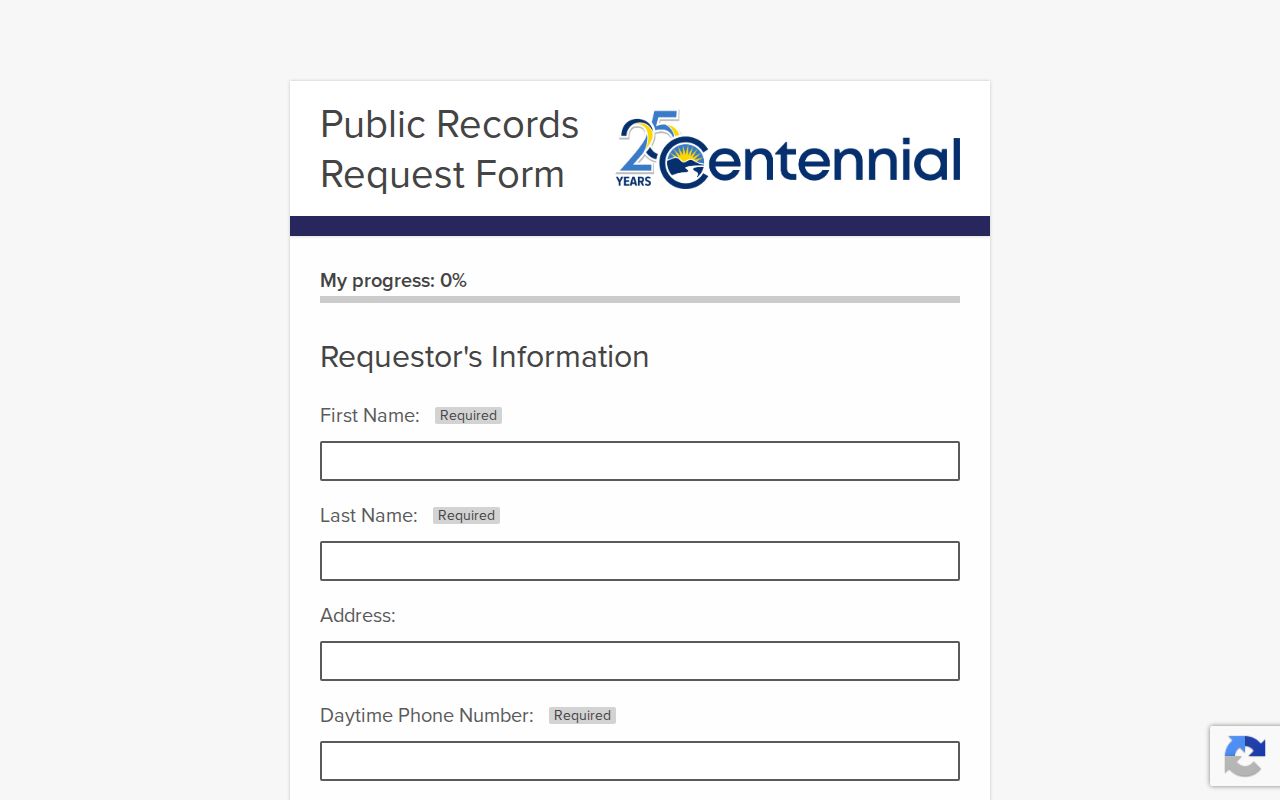
The form image shows the value of a defined description and a custodian-based request instead of an unsupported address-history shortcut.
Use Previous Residents Carefully
A historical resident is evidence of a person’s appearance in a source, not proof of a current location. A deed party may be a lender, trustee, estate, or corporate entity. A directory may omit a household or use an older place name. An obituary may summarize a relationship but not give a full address. A public record can also be sealed, redacted, protected, or unavailable under a confidentiality program.
Colorado’s Address Confidentiality Program provides a substitute address and mail forwarding for eligible participants. The Colorado Privacy Act, CORA exemptions, court sealing rules, and vital-record eligibility rules all limit what can be copied or republished. Use a source date, role label, and minimal personal detail.
Lawful personal use. Previous residents research in Centennial is for house history, genealogy, civic research, and lawful personal curiosity. Do not use a historical name or address to stalk, harass, intimidate, or harm anyone.
The most useful address history is a short, sourced chain that a reader can check with the Recorder, library, archive, or City of Centennial.